
The vacancies are learnt to be impacting the I-T department's day-to-day functioning.

The duty hike on cigarettes by 16 per cent announced in the Union Budget 2023-24 would have a nominal impact of around 7-12 paise per stick across cigarette categories, according to experts. This upward revision in National Calamity Contingent Duty (NCCD) would have negligible impact on smokers and the companies could easily absorb the shock as it may not also have any resultant impact on margins, they said. Finance Minister Nirmala Sitharama in the Union Budget for 2023-24 on Wednesday proposed to revise and increase the duty on cigarettes to about 16 per cent.

The gross tax revenues have touched 65 per cent of the Budget estimates at Rs 17.81 lakh crore during the first eight months of the current fiscal till November, propelled by corporate and personal income tax mop-up, according to the Economic Survey 2022-23 presented in Parliament on Tuesday. The survey, authored by Chief Economic Advisor V Anantha Nageswaran, said the 'substantial reforms' in India's taxation ecosystem post-2014 and policy reforms have removed the distortionary incentives from the economy. Reforms like GST, reduction in corporate taxes, exemption of sovereign wealth funds and pension funds from taxes, and removing Dividend Distribution tax have reduced the tax burden on individuals and businesses.

The tax authorities may tell banks and crypto exchanges to report transactions of virtual digital assets (VDAs) as the government begins taxing gains from cryptocurrencies and non-fungible tokens from April 1. So far, the tax department has relied on voluntary disclosures on transactions of VDAs. Once implemented, the sale and purchase of digital assets will reflect in the Annual Information Statement (AIS). The AIS contains details of at least 46 of the financial transactions done by a taxpayer in a financial year.

As the mutual fund industry evolves, certain aspects only get worse
The corporate sector and banks will henceforth have the onus of deciding the fate of their debt for tax treatment, with their decision binding on the department, going by a recent order of the Mumbai tribunal.

While equity savings funds could offer higher returns over three-five years, they would also be more volatile.

A term plan's premium is lower than that of a wholelife plan.

Target prices around Rs 400 suggest a significant upside.

The fear of rejection keeps many of us from experiencing the rich lives we deserve, notes Harsh Roongta.

It is high time the Indian government signalled discomfort with the UK providing refuge to those accused of financial crimes in India, states Jaimini Bhagwati.

Crypto exchanges have been asked to furnish details this month itself.

The finance ministry is looking at rationalising long-term capital gains tax structure by bringing parity between similar asset classes and revising the base year for computing indexation benefit to make it more relevant, an official said on Friday. Currently, shares held for more than one year attract a 10 per cent tax on long-term capital gains. Gains arising from sale of immovable property and unlisted shares held for more than 2 years and debt instruments and jewellery held for over 3 years attract 20 per cent long term capital gains tax.

Petrol and diesel prices were on Wednesday hiked by 80 paise a litre each, taking the total increase in rates in the last nine days to Rs 5.60 per litre. Petrol in Delhi will now cost Rs 101.01 per litre as against Rs 100.21 previously while diesel rates have gone up from Rs 91.47 per litre to Rs 92.27 according to a price notification of state fuel retailers. Rates have been increased across the country and vary from state to state depending upon the incidence of local taxation.

Elections may be a few months away, but the government may get into election mode much earlier than that, predicts A K Bhattacharya.

'India has the potential to do a lot more to take advantage of the time today where we stand to gain, geopolitically and in terms of market attractiveness.'

For all its claims to economic glory, the majority of India's population lives vulnerable lives, a situation that has only worsened over the past 15 years, to the extent that the government now fears to release economic data or even conduct a proper Census, notes Rathin Roy.

A record GST tax collection, an overhaul of the income tax return filing portal and the landmark move to scrap retrospective taxation have set the stage for the next level of reforms in tax administration that include bringing a framework for cryptocurrencies and rationalising the GST rate structure. With tax reforms such as faceless assessment taking roots, 2021 will go down as the year that pivoted the tax administration in a country aspiring to become the world's favourite investment destination. The task ahead is going to be a tough one as the tax department would grapple with taxing cryptocurrencies, rationalising Goods and Services Tax (GST) rates to shore up revenues and post June 2022, the scenario of how the GST revenue plays out for states without the Centre's support of compensation.
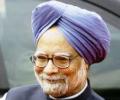
The panel, headed by former Central Board of Direct Taxes chairman N Rangachary, will be in addition to the one set up to review the General Anti-Avoidance Rules provisions to address the concerns of foreign investors.

Reminiscent of the past two years, the market has made positive strides ahead of the Union Budget 2023-24 (FY24). The benchmark National Stock Exchange Nifty has gained 1.8 per cent in the last month. Typically, markets tend to gain ahead of the Budget as investors build in optimism.

PEs and VCs are taking a closer look at their bouquet of investments. Leading voices in the sector are categorical that cash-burn rates -- that's blowing up equity to acquire market share -- as a business model can't continue to be the polestar.

The debate, which saw several heated exchanges, will continue on Thursday.

'If because of El Nino, the monsoon is affected adversely in the current year, naturally it will affect income projections and consequently Budget numbers.'

The Union government could target a fiscal deficit of 5.8-6 per cent of nominal GDP for 2023-24, and it should continue its capital expenditure push and look to simplify the personal income tax regime, economists recommended Finance Minister Nirmala Sitharaman and her team during their pre-Budget interaction on Monday. Starting last week, Sitharaman had eight pre-Budget consultations this time. More than 110 invitees representing seven stakeholder groups participated in these meetings, the finance ministry said in a statement. The stakeholder groups included representatives and experts from agriculture and agro-processing industry; industry, infrastructure & climate change; financial sector and capital markets; services and trade; social sector; trade unions and labour organisations; and economists.

The government has deferred the implementation of the proposal to make six airbags mandatory in passenger cars by one year to October 1, 2023, Road Transport and Highways Minister Nitin Gadkari said on Thursday. The government had earlier planned to make six airbags mandatory in eight-seater vehicles for enhanced safety of occupants from October 1, 2022. "Considering the global supply chain constraints being faced by the auto industry and its impact on the macroeconomic scenario, it has been decided to implement the proposal mandating a minimum of 6 Airbags in Passenger Cars (M-1 Category) w.e.f 01st October 2023," Gadkari said in a tweet.

President Ram Nath Kovind on Monday appointed Chandra as 24th CEC on Monday.

Senior tax officials were told to focus on cash collection from the arrears so that the target for FY23 was achieved and the overall revenue position improved.

The Supreme Court collegium headed by Chief Justice D Y Chandrachud has recommended the names of three advocates for appointment as judges of the Bombay high court.

The surprise action comes weeks after the broadcaster aired a two-part documentary on the 2002 Gujarat riots and India.

Vodafone further said it has "always been confident" that no tax is due on the company. The government in August enacted a law to end all retrospective taxation imposed on indirect transfer of Indian assets. The rules under the law seek to withdraw tax demands made using a 2012 retrospective legislation to tax the indirect transfer of Indian assets and also refund the amount paid in these cases without any interest. Asked if the company has filed an application with the Indian government to settle the retrospective tax dispute, a Vodafone spokesperson said, "We can confirm we have filed an application".

Finance Minister Nirmala Sitharaman on Saturday said the new tax regime will benefit the middle class as it will leave more money in their hands. Talking to reporters after the customary post-Budget address to the central board of the RBI, she said it is not necessary to induce individuals to invest through government schemes but give them an opportunity to make a personal decision regarding investments. "...the way we allowed for standard deduction and also the rates which have been fixed, tax rates which have been fixed for different slabs, it has actually left more money in the hands of the people, the taxpayer, the household," she said.

The GST Council has set up a Group of Ministers, chaired by Haryana Deputy Chief Minister Dushyant Chautala, to suggest required changes in the law for setting up the GST Appellate Tribunal (GSTAT). The GST Council, chaired by Finance Minister Nirmala Sitharaman and comprising state ministers, had last week decided to constitute a Group of Ministers (GoM) to address various concerns raised by states in relation to constitution of the GSTAT. As per the Terms of Reference (ToR) of the GoM, the panel would recommend required amendments in the GST law to ensure that the legal provisions maintain the right federal balance and are in line with the overall objective of uniform taxation within the country.

Avoid discontinuing your SIPs. Persist for at least 7-10 years.

The conference, being attended by some 700 aviation leaders including chiefs of airlines and aircraft-makers, is discussing issues like aviation safety, environment, distribution and financial sustainability among others.

Mihir Tanna, Associate Director, S K Patodia & Associates, answers your tax queries.

'From the tiniest to mid-level organisations and even some at the lower end of the large-scale ones would say that computerisation and the extensive documentation and regulatory requirements for GST have made the compliance process worse in many cases.'

While there has been no official statement related to the action, British government sources said they are 'closely monitoring reports of tax surveys conducted at the offices of the BBC in India'.

Life insurance companies reported a 17 per cent year-on-year (YoY) drop in new business premium (NBP) in February as state-owned Life Insurance Corporation of India's premiums contracted 32 per cent during this period on account of a drop in its group single premium segment. According to data released by the Life Insurance Council, the industry earned an NBP of Rs 22,847.65 crore in February - a drop of 17 per cent from the same period a year ago.

The Director General of Goods and Services Tax Intelligence (DGGI) has slapped its heftiest tax notice of Rs 21,000 crore on Bengaluru-based Gameskraft Technology (GTPL) for allegedly evading GST on the betting amount. Gameskraft has dubbed the notice a "departure from the well-established law of the land". The company is accused of promoting online betting through card, casual and fantasy games like Rummy Culture, Gamezy and Rummy Time.
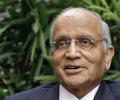
The government should not be running businesses as public sector companies are inefficient and do not generate enough resources to fund their own growth, according to Maruti Suzuki India chairman R C Bhargava. Public sector companies need support all the time to grow and need funds from the government for capital investments, he told PTI in an interview. "I have no doubt that government should not be in business. No way," he said when asked if governments should be in the business of running enterprises on the basis of his experience of witnessing the transformation of the then government-owned Maruti Udyog Ltd to Maruti Suzuki India Ltd, majority owned by Japan's Suzuki Motor Corporation.
